Tenant Sales Reporting for Percentage Rent: What NNN Landlords Should Track
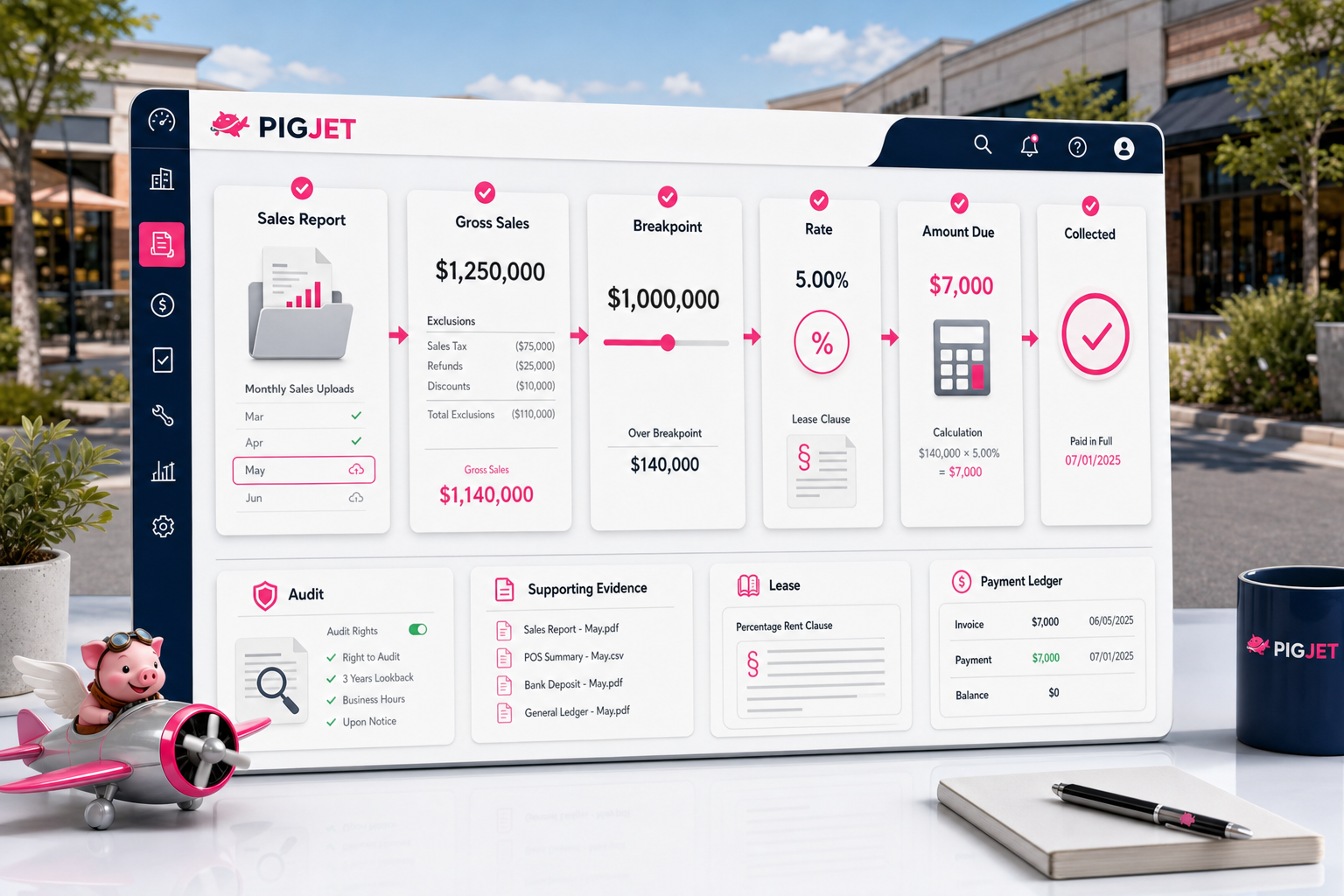

Percentage rent is easy to model before the lease is signed. The harder work starts after the tenant opens for business.
Once the lease requires sales reporting, the landlord has to collect reports, check the gross sales definition, watch the breakpoint, follow up on missing certificates, and decide when an audit is worth pursuing. If those controls are loose, percentage rent becomes a clause in the lease that nobody operates from.
For NNN retail landlords, tenant sales reporting is not just a nice-to-have performance metric. It is the operating record behind percentage rent, tenant health, audit rights, and sometimes lender or owner reporting.
This guide focuses on what to track after the lease is signed.
Start With The Reporting Clause, Not The Sales Number
Before reviewing any tenant sales report, pull the active lease and amendments. The report is only useful if you know what the tenant is required to provide.
For each percentage-rent lease, confirm:
- reporting frequency: monthly, quarterly, annually, or some combination
- due date after each reporting period
- who must sign or certify the report
- whether annual statements require officer certification
- whether backup is due automatically or only after request
- how long the tenant must retain sales records
- audit window and notice requirements
- whether the tenant must pay estimated percentage rent during the year
- whether late reports trigger default, fees, interest, or reimbursement rights
A spreadsheet that only tracks annual gross sales is incomplete. The landlord also needs to know whether the March sales report was due April 10, April 15, or 30 days after month-end. Those dates drive follow-up.
Know Which Sales Count As Gross Sales
Percentage rent depends on the lease definition of gross sales. That definition rarely matches the tenant's internal sales dashboard perfectly.
Most leases include sales made from the premises, but the details vary. The lease may include or exclude delivery orders, catering, online orders, returns, sales taxes, gift card redemptions, employee discounts, wholesale sales, vending income, or marketplace sales.
That means the landlord should not accept a summary number without understanding what it represents.
When a report arrives, ask three questions:
- Does the report match the lease definition of gross sales?
- Does it show exclusions separately enough to review them?
- Does it cover the correct store, suite, and reporting period?
The goal is not to micromanage the tenant's books. The goal is to make sure the report is tied to the lease definition instead of whatever the tenant's accounting system happens to export.
Track The Reporting Calendar
Tenant sales reporting should be managed like a recurring lease obligation.
For every tenant with percentage rent, track:
- reporting period
- report due date
- date received
- amount reported
- certification received, if required
- backup received, if required
- follow-up sent
- response received
- percentage rent due
- percentage rent billed
- percentage rent collected
This matters most when no percentage rent is due yet. Landlords often pay attention only after the breakpoint is reached. That is a mistake.
If a tenant misses sales reports for three quarters and then reports annual sales just below the breakpoint, the landlord is now trying to review a year's worth of reporting at once. A simple monthly or quarterly control prevents that scramble.
Watch The Breakpoint During The Year
The breakpoint is the sales threshold above which percentage rent starts. Landlords should not wait until year-end to find out whether the tenant crossed it.
For a tenant with monthly reporting, keep a running year-to-date view:
| Month | Gross sales reported | Year-to-date sales | Distance to breakpoint | | --- | ---: | ---: | ---: | | January | $180,000 | $180,000 | $1,820,000 | | February | $195,000 | $375,000 | $1,625,000 | | March | $225,000 | $600,000 | $1,400,000 |
This does two useful things.
First, it helps the landlord forecast whether percentage rent is likely. That matters for owner reporting, lender discussions, and cash planning.
Second, it helps identify strange patterns early. If a tenant reports flat sales every month in a seasonal business, or reports a steep drop while neighboring tenants are growing, the landlord can ask questions before the audit window gets tight.
Separate Missing Reports From Bad Reports
A missing sales report and a questionable sales report are different problems.
A missing report is a compliance issue. The tenant has not provided something the lease requires. The response should be a clean reminder tied to the lease section and due date.
A questionable report is a review issue. The tenant submitted a number, but the number may not match the lease definition or may need backup.
Track them separately:
- `Missing`: no report received by due date
- `Incomplete`: report received but missing certification, backup, or required period detail
- `Under review`: report received and being checked against lease definition
- `Accepted`: report reviewed with no current follow-up
- `Disputed`: landlord has challenged the report or requested support
- `Audited`: report period has moved into a formal audit process
This keeps the landlord from treating every follow-up like a dispute. Most reporting issues are simple operating misses. Some become audit issues. The tracking should show the difference.
What To Request With A Sales Report
The lease controls what the landlord can require, but a strong reporting package usually includes more than one gross sales number.
Depending on the lease and tenant type, the landlord may need:
- gross sales for the period
- year-to-date gross sales
- excluded sales by category
- returns and allowances
- sales tax excluded from the calculation
- delivery, catering, online, or third-party marketplace sales
- gift card redemptions, if relevant
- signed certification from an authorized officer or manager
- statement that the report was prepared under the lease definition
The last point is important. A tenant can honestly report "sales" from its POS system while still excluding revenue the lease treats as gross sales. A certification tied to the lease definition reduces that ambiguity.
Audit Windows Need Their Own Deadline
Percentage-rent audit rights are only useful if the landlord knows when they expire.
Many leases limit the landlord's right to audit sales records to a defined period after receiving the annual statement, after the end of the lease year, or after a report is delivered. Others require written audit notice within a specific number of days.
Track the audit deadline separately from the reporting deadline.
For each reporting year, capture:
- annual statement due date
- annual statement received date
- audit notice deadline
- records retention period
- audit reviewer requirements
- tenant response deadline after audit notice
- cost-shifting threshold if the audit finds underreported sales
Do not rely on memory here. If the audit window is 180 days after receipt of the annual sales statement, the clock may start on the date the tenant sends the statement, not the date someone gets around to reviewing it.
When A Landlord Should Consider Auditing
Not every percentage-rent lease needs a sales audit. Audits cost time, money, and relationship capital.
But an audit may be worth considering when:
- reported sales are just below the breakpoint for multiple periods
- sales reports are consistently late or incomplete
- the tenant's reported sales pattern does not match visible traffic or seasonality
- exclusions are large and poorly explained
- delivery, catering, or online sales are material to the tenant's business
- a store remodel, expansion, or new use changes how sales are generated
- a prior audit found underreporting
- the amount at stake justifies the audit cost
The decision should be documented. If the landlord chooses not to audit, note why. If the landlord does audit, preserve the lease notice, tenant response, auditor findings, and any billing adjustment in the property record.
Do Not Let Sales Reporting Float Outside Lease Administration
Sales reports often arrive by email, get saved to a folder, and never connect back to the lease abstract or rent ledger.
That creates problems later. The landlord may know sales were reported, but not whether the report was late, whether the certificate was missing, whether percentage rent was billed, or whether an audit deadline expired.
Sales reporting should connect to:
- the lease clause requiring the report
- the breakpoint and percentage-rent formula
- the tenant communication record
- the rent ledger or billing workflow
- annual owner reporting
- audit rights and document retention
This is the same reason rent escalations and renewal options need more than calendar reminders. The date is only one part of the obligation.
Sample Monthly Review Workflow
A practical monthly workflow can be simple:
1. List tenants with sales reports due in the next billing cycle. 2. Confirm which reports were received. 3. Send reminders for missing reports. 4. Review received reports against the lease definition. 5. Update year-to-date sales and breakpoint status. 6. Flag unusual variances or incomplete exclusions. 7. Bill percentage rent if the breakpoint has been crossed and the lease requires billing. 8. Save the report, certification, reminders, and review notes in the tenant record. 9. Update audit-window tracking for annual or certified statements.
This is not complex work. It becomes hard when the information lives in separate places.
How PigJet Fits
PigJet is built for the commercial landlord work that sits between the lease, the tenant record, and the accounting system.
For percentage rent, that means the landlord should not have to rebuild the reporting workflow from email, spreadsheets, lease PDFs, and QuickBooks notes every month. The lease obligation, reporting due date, gross sales history, breakpoint, follow-up status, and supporting documents should be visible together.
That is especially important for NNN retail landlords with several tenants using different sales definitions, reporting deadlines, and audit windows. The risk is not just missing a rent charge. The risk is losing the documentation trail that proves whether the rent charge was calculated and reviewed correctly.
For the broader lease mechanics, see our guide to percentage rent clauses in NNN leases. For related operating controls, see commercial lease abstraction and rent escalation tracking.
Bottom Line
Tenant sales reporting is where percentage rent becomes an operating workflow.
A landlord needs the report, the due date, the lease definition of gross sales, the breakpoint calculation, the certification status, and the audit window in one trackable process. Otherwise, percentage rent can look like upside in the lease but disappear in day-to-day administration.
The best control is simple: treat sales reporting like any other lease obligation. Track what is due, verify what was received, follow up when it is missing, and preserve the audit trail before the window closes.