Commercial Property Capital Reserve Planning for Small Landlords
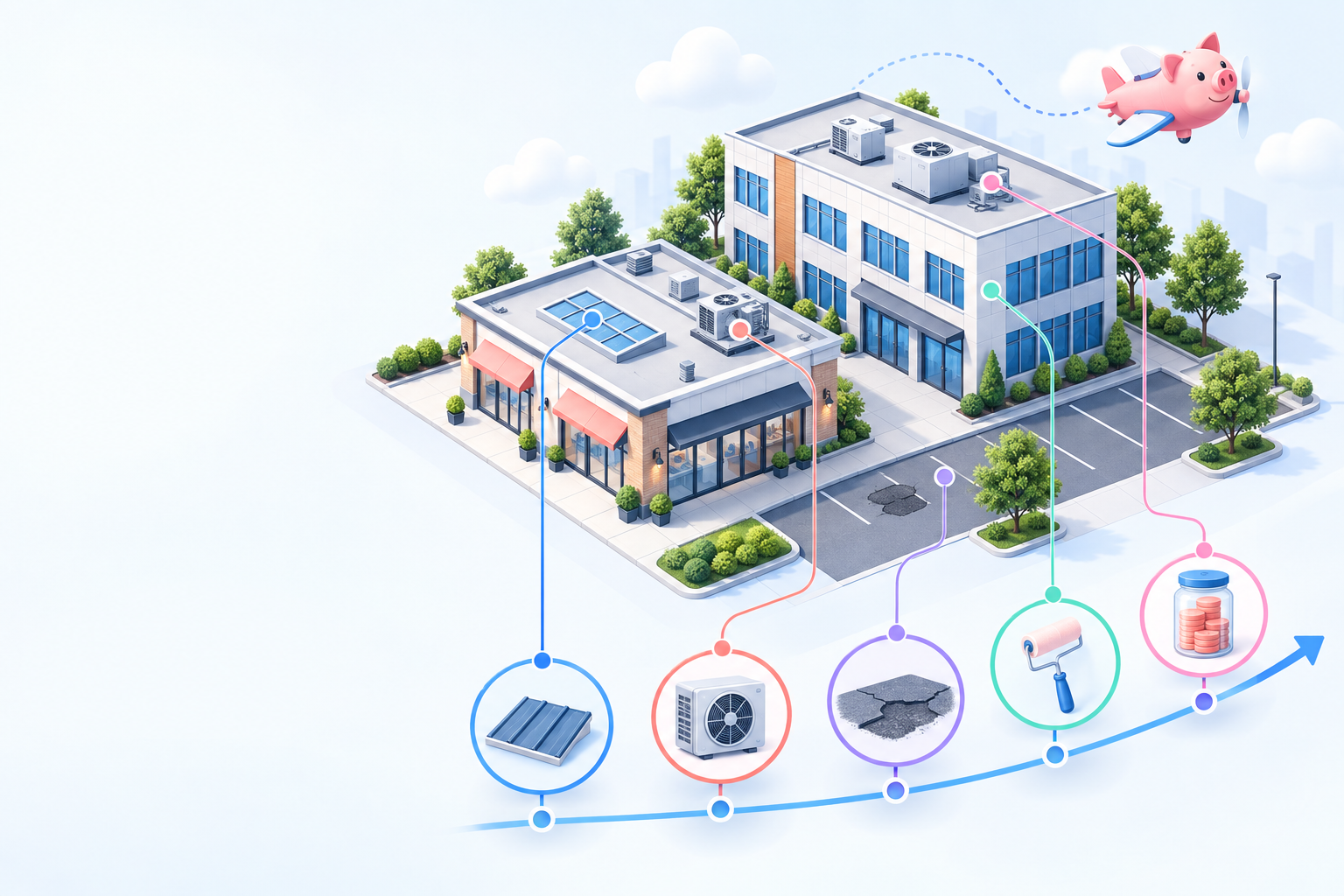
A roof replacement does not become a capital problem the day it fails. It becomes one when the property has no workable plan for the years leading up to it.
Small commercial landlords often know the big exposures: aging rooftop units, worn parking areas, a roof nearing the end of its serviceable life, or a fire/life-safety item that could require work. The hard part is turning that knowledge into an operating routine. A vendor proposal sits in an email. A condition note lives in an inspection report. The lease language is somewhere else. Then a vacancy, renewal decision, or urgent repair forces all of those pieces together at once.
A capital reserve plan gives those decisions a place to land before they become emergencies. It is not a prediction of exact costs or timing. It is a practical multi-year view of landlord-held building exposure, the cash that may be needed, the lease questions to resolve, and the assumptions worth revisiting.
Start With an Asset Inventory, Not a Reserve Number
Choosing a round annual reserve amount before you know what it is meant to cover can create false comfort. Start by listing the assets and systems for which the owner may have meaningful capital exposure.
For a small retail, office, or mixed commercial property, that list may include:
- roof coverings, drainage, and related flashing or penetrations
- parking lots, sidewalks, curbs, striping, and site drainage
- HVAC equipment, controls, and major components
- electrical service, lighting, panels, and backup equipment where applicable
- plumbing mains, water heaters, pumps, or other shared systems
- fire alarm, sprinkler, emergency lighting, and other life-safety systems
- exterior walls, windows, doors, canopies, and signage structures
- elevators, gates, or other property-specific equipment
For each item, capture the details that make the list usable: location, approximate age, condition notes, last major repair or replacement, current maintenance history, available inspection records, and the person or vendor who can help update the picture.
You do not need an engineering report to begin organizing records. But if an asset is unfamiliar, appears to be deteriorating, or could create a safety issue, get the right qualified professional involved. The plan should reflect informed condition assessments, not guesses dressed up as certainty.
Separate Operating Work From Capital Planning
Routine maintenance belongs in the operating plan. Larger replacements, system renewals, and site work need a separate capital-planning view, even when a repair can blur the line.
This separation helps prevent two common mistakes: treating an expected replacement as an ordinary monthly expense, or filling the reserve plan with every small repair ticket.
Use an operating budget for recurring and near-term work such as service agreements, inspections, cleaning, minor repairs, and known seasonal maintenance. Use the reserve plan for projects that may require a larger, less frequent outlay or a decision about scope, timing, financing, tenant coordination, or lease treatment.
The accounting classification of a cost and the question of whether it can be passed through to a tenant are not determined by the reserve plan. They depend on the facts, the executed lease and amendments, and advice from the appropriate accounting or legal professionals. For a closer look at one frequently disputed example, read HVAC: Capital Expense or CAM Charge?.
Give Every Planned Item a Timing Range and Confidence Level
Exact dates and exact costs can make a reserve schedule look more precise than it is. A better starting point is to document what you know and label what you do not.
For each potential project, record:
| Planning field | What to capture | | --- | --- | | Asset or project | The system, area, or renewal being considered | | Expected window | A range such as this year, 1–2 years, 3–5 years, or later | | Condition signal | Inspection note, vendor observation, repair history, warranty record, or owner observation | | Cost basis | Recent proposal, historical work, preliminary vendor discussion, or a placeholder needing validation | | Confidence | High, medium, or low based on the quality and age of the evidence | | Operational impact | Potential closure, access needs, tenant disruption, safety concern, or seasonal constraint | | Next action | Inspect, obtain scope, seek bids, schedule maintenance, review lease, or monitor |
The confidence label is useful because it tells you how to manage the item. A high-confidence roof project with a current scope may need funding and scheduling decisions. A low-confidence paving item may only need a site review and a calendar reminder. Both deserve visibility, but they should not be managed as if they were equally certain.
Build the Plan Across More Than One Year
A reserve plan is most useful when it shows the sequencing problem, not just a list of possible projects. Map the items across a multi-year horizon and then ask what could happen if several needs arrive together.
Start with the items you already expect. Then include a reasonable allowance for unknowns only as an internal planning assumption, not as a promise that the number will cover every event. Update the plan when you receive better condition information, new proposals, or a change in the property’s cash position.
The goal is to see the relationship between three things:
1. Asset timing: when work may become necessary. 2. Available cash: how much can be set aside or funded without starving operations. 3. Decision lead time: when you need to inspect, define scope, obtain bids, coordinate tenants, or arrange access.
That lead time matters. A parking project may be easier to schedule in a particular season. A rooftop replacement may require tenant access and weather planning. A life-safety item may need quicker action than its budget timing suggests. The reserve plan should show those constraints before the calendar forces the decision.
Test the Plan Against Vacancy and Lease Rollover
The reserve schedule should not live apart from the rent roll and lease calendar. A project that looks manageable under full occupancy may be much harder to fund during a vacancy, a slow renewal, or a period when a major tenant is negotiating an extension.
At least quarterly, test a few simple scenarios:
- a tenant renews later than expected or leaves at lease expiration
- a vacant suite takes longer to lease than planned
- a large project lands in the same year as tenant improvements or leasing costs
- an expected reimbursement, recovery, or insurance payment is delayed or does not apply
- a vendor identifies a more urgent condition during an inspection
The point is not to forecast every outcome. It is to identify when the property would need a different response: postpone a discretionary project, accelerate a bid process, build cash earlier, revisit the scope, or discuss funding with the ownership team.
Your commercial property cash flow forecast shows whether cash is likely to be available in the near term. The reserve plan adds the longer-range asset exposure that should inform that forecast.
Document Lease Treatment Before You Need It
For each significant capital item, note the lease provisions that may affect the decision. This is not a substitute for interpreting the lease; it is a way to make sure the question is identified early.
Keep the executed lease, amendments, and relevant correspondence connected to the reserve-plan record. For each item, flag questions such as:
- who is responsible for repair, replacement, maintenance, or compliance work
- whether the item serves one tenant, multiple tenants, or common areas
- whether the lease addresses capital expenditures, amortization, caps, exclusions, or consent
- whether notices, access coordination, or tenant approval could be required
- whether a pending renewal, option, or amendment could change the practical decision
Lease terms vary widely, including among NNN properties. Do not assume a label such as “triple net” answers every capital or recovery question. Review the actual documents with qualified advisors when the treatment matters.
The same recordkeeping discipline helps with annual operating estimates. If you are setting the next year’s tenant billings, see How NNN Landlords Should Set Annual CAM Estimates Before the Year Starts. That article focuses on recurring recoverable expenses; your reserve plan should remain a separate view of longer-range capital exposure.
Review the Assumptions on a Set Cadence
The reserve plan is not a once-a-year spreadsheet exercise. Give it a short, repeatable review cadence:
1. Update condition notes after inspections, service visits, and meaningful repairs. 2. Add or replace cost support when proposals become stale or scope changes. 3. Compare the plan with current cash, vacancy, renewal, and leasing assumptions. 4. Confirm whether upcoming work needs lease, tenant, insurance, lender, or professional review. 5. Record the decision: proceed, defer, inspect further, obtain bids, or monitor.
This is enough to turn the plan into an operating tool. A small landlord does not need a complicated model to benefit from clearer records, earlier questions, and fewer last-minute capital decisions.
A Simple Reserve Plan Makes the Next Decision Easier
No reserve plan can remove uncertainty from a commercial property. It can make uncertainty visible while there is still time to respond.
Inventory the assets you may be responsible for. Separate recurring operations from capital exposure. Use timing ranges and confidence levels instead of pretending every estimate is final. Test the plan against vacancy and lease rollover. Keep the lease questions beside the project record. Then revisit the assumptions as the property changes.
PigJet helps commercial landlords keep lease dates, property records, operating activity, and the questions behind the numbers organized in one place. See how PigJet supports commercial property operations.