Commercial Property Inspection Checklist for Landlords
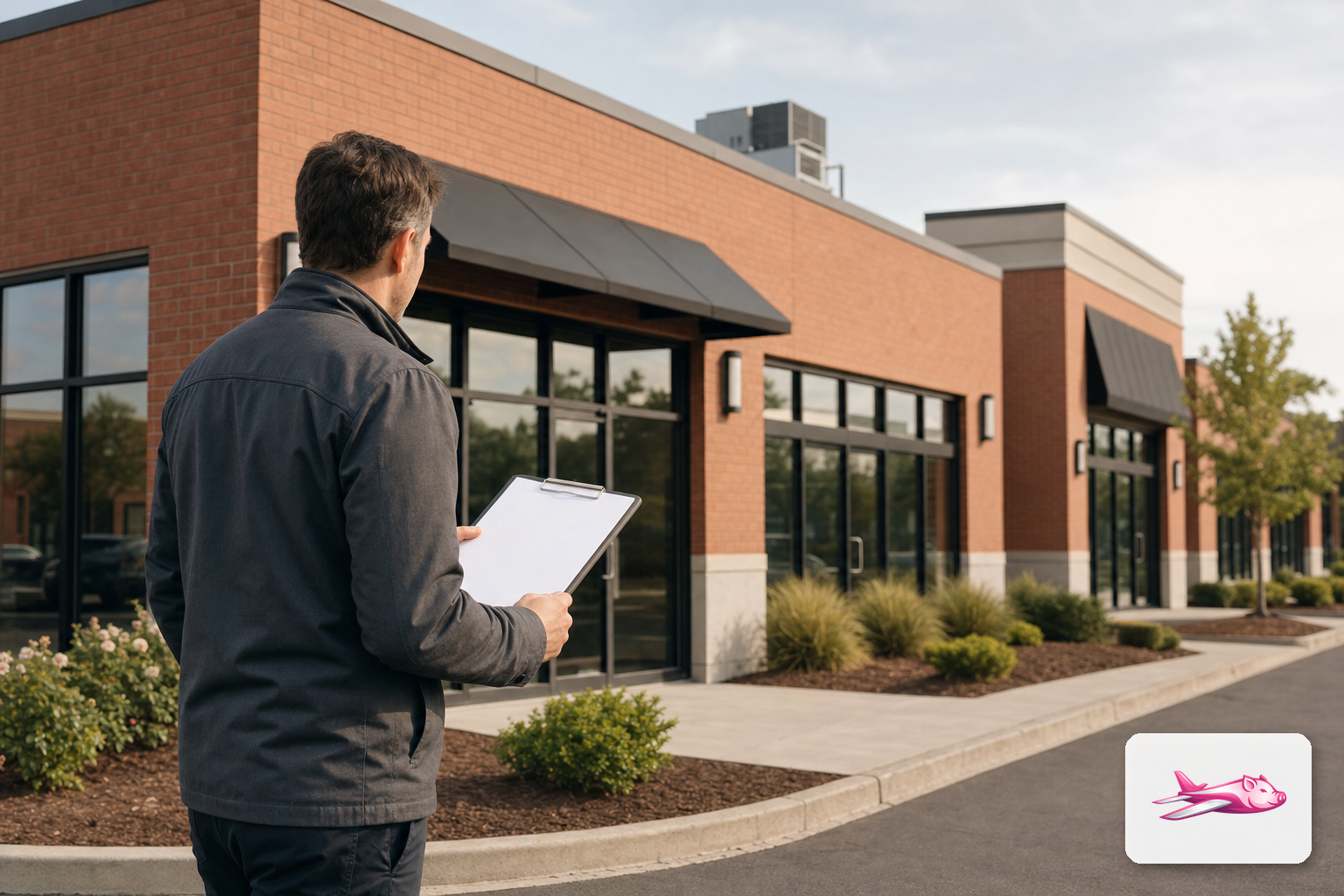
Commercial Property Inspection Checklist for Landlords
A commercial property inspection should not end with a list of things that looked wrong that day. Its job is to create a usable property record: what you saw, when you saw it, who owns the next step, what the lease says, and what proves the item was closed.
That matters whether you own a single retail strip, an industrial building, or a growing NNN portfolio. A loose ceiling tile, standing water, damaged curb, lighting outage, blocked exit, overflowing dumpster, or tenant maintenance issue can become harder to resolve once the details live only in a manager's memory or a photo roll.
Use this as an operating checklist, not as legal, engineering, safety, accounting, or insurance advice. The lease, local requirements, and qualified professionals control the right response to a particular condition.
Set the inspection cadence before problems pile up
Start by deciding what gets inspected and how often. The right cadence depends on the property, its use, weather, tenant activity, vendor schedules, and any obligations in the lease or lender and insurance requirements.
For many landlords, the useful distinction is between:
- recurring common-area walks for visible conditions and service issues
- seasonal checks before and after severe-weather periods
- vendor-quality checks tied to landscaping, cleaning, waste, paving, roof, or snow work
- tenant-area walkthroughs when the lease permits them and the situation calls for them
- event-driven inspections after a leak, complaint, vacancy, incident, or construction work
Put the recurring schedule in one place and name the person responsible for completing it. An inspection that is "usually done monthly" is easy to miss when a property manager is covering a vacancy, a repair, or an unexpected tenant request.
Bring the lease and prior open items to the walkthrough
An inspection is more useful when it begins with context. Before walking the property, review the prior inspection's open items, tenant complaints, active vendor work, and any upcoming deadlines.
For NNN and other commercial leases, also have a practical view of the responsibility map. You do not need to resolve every lease interpretation in the parking lot. You do need to know when a condition may involve tenant maintenance, landlord work, a shared-area obligation, a vendor contract, an insurance issue, or a potential CAM question.
A current commercial lease abstraction can make that review faster by keeping key operational obligations easier to find. The executed lease and amendments remain controlling.
Walk in a consistent order
Use the same route each time. Consistency makes it easier to notice changes and helps another manager understand what was reviewed if they take over the property.
Start outside and move inward where appropriate:
- site entry, monument signs, sidewalks, curbs, striping, and accessible routes
- parking areas, lighting, drainage, landscaping, trash enclosures, and loading areas
- building exterior, roof-visible conditions, gutters, downspouts, doors, windows, and signage
- common areas, corridors, restrooms, stairwells, elevators, and mechanical-room access where authorized
- vacant suites, tenant-facing areas, and service areas when access and lease rights allow
Look for conditions rather than trying to make technical diagnoses. Record what you observed: water near an entry, a broken light pole cover, a loose handrail, a cracked storefront panel, an odor in a corridor, or a vendor area that was not serviced. If a condition needs an engineer, licensed contractor, safety professional, insurer, or legal review, route it to the appropriate professional instead of guessing at the cause or repair.
Document conditions so someone else can act on them
For every finding that needs follow-up, capture enough detail to make the next step clear:
- date, time, property, and exact location
- a concise description of the observed condition
- dated photos or video when useful
- urgency and any immediate protective step taken
- the likely owner of the next action
- the related tenant, vendor, service contract, or lease section when known
- the due date, communication sent, and completion evidence needed
Avoid notes such as "check roof" or "tenant issue." A better entry is: "Water staining visible on ceiling tile outside Suite 204; photographed; facilities vendor asked to inspect source; property manager to update tenant by Thursday; retain vendor report and completion photo."
The goal is not more paperwork. It is a record that does not have to be reconstructed from a spreadsheet, inbox, and memory weeks later.
Review responsibility before assigning costs or sending demands
Finding a problem and deciding who is responsible are different steps. Before billing a tenant, directing a vendor, or treating a cost as recoverable, review the applicable lease language, amendments, work orders, service contracts, and facts.
For example, an exterior condition may involve common-area maintenance, a tenant's exclusive-use obligation, a vendor performance issue, or a capital-versus-operating question that needs a separate review. A tenant complaint may also reveal a condition that needs immediate attention before the responsibility question is settled.
Keep the operational record moving while the question is reviewed. Note what was found, who was contacted, the interim action, and the decision still needed. This creates a cleaner trail for tenant communication and later CAM reconciliation work without turning the inspection into an accounting conclusion.
Coordinate vendors with a clear closeout standard
When a vendor is involved, give them a specific location, scope, access information, deadline, and requested proof of completion. Confirm whether the work requires tenant coordination, a certificate of insurance review, a permit, or additional professional input under your process.
Do not close an item just because a vendor says it is complete. Match the closeout to the original finding:
- confirm the work was performed at the right location
- save the invoice, report, photo, or other completion evidence
- document any remaining exception or follow-up date
- update the tenant or stakeholder when a response was promised
- link the work back to the inspection record and relevant property documents
For recurring vendors, inspection findings can also show where a service scope or communication process needs to change. A pattern of missed cleanup, lighting, or landscaping work is easier to manage when the evidence is organized by date and location.
Commercial property inspection checklist
- Confirm the inspection date, route, access needs, and responsible manager
- Review prior open items, tenant complaints, active work orders, and vendor commitments
- Pull the relevant lease and responsibility notes before tenant-specific follow-up
- Inspect site access, sidewalks, parking, lighting, drainage, landscaping, and waste areas
- Inspect the building exterior, entries, signs, visible roof or drainage conditions, and service areas
- Review common areas and authorized tenant or vacant-suite areas
- Capture dated photos and precise location notes for every follow-up item
- Take reasonable interim action for urgent conditions and escalate to qualified professionals as needed
- Assign an owner, next step, due date, and required completion evidence to each item
- Check lease, vendor, and service-contract responsibility before billing or making a demand
- Send clear tenant, vendor, or stakeholder communications and retain the record
- Verify completion, save proof, and carry unresolved items into the next inspection
Make the closeout auditable
The best closeout question is simple: if another manager opened this record 90 days from now, could they tell what was found, what was done, and what is still open?
If the answer is no, the inspection is a snapshot rather than an operating system. A practical closeout record connects the original finding to the owner, communications, vendor work, lease context, and evidence of completion. It also leaves a clear exception when the item is not yet resolved.
That discipline protects the day-to-day operation first. It also gives landlords a more reliable record for tenant conversations, vendor accountability, recurring maintenance planning, and year-end review.
PigJet helps commercial landlords keep property tasks, tenant communications, documents, and lease context connected. If inspection follow-up is still spread across photos, emails, and reminders, see how a one-property PigJet pilot can help your team build a cleaner operating record.