CAM True-Up Audit Trail: Six Source Documents to Review Before You Bill

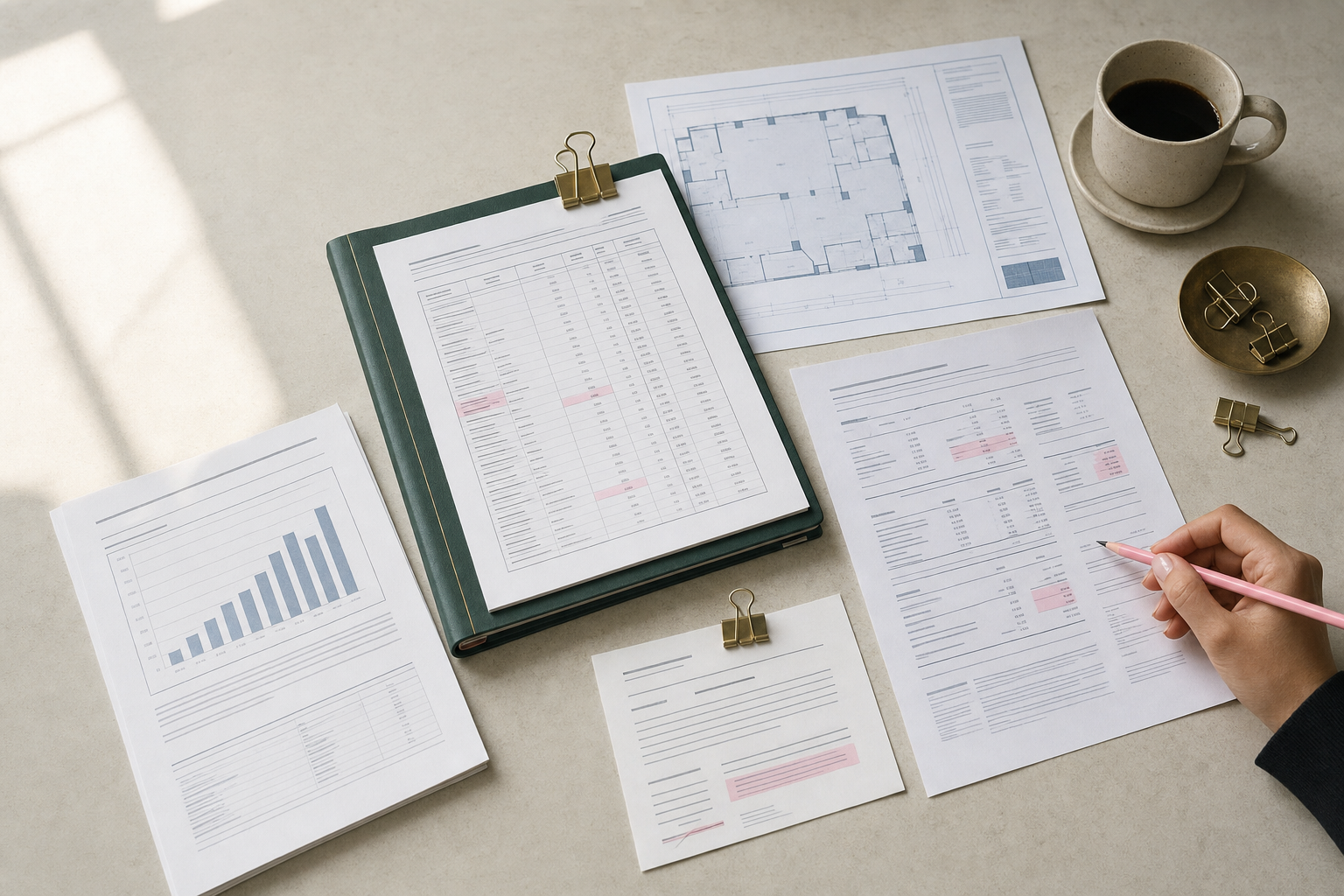
A CAM true-up can be mathematically correct and still be hard to defend. The problem is usually not the final balance. It is the missing trail between the tenant's lease, the expenses in the pool, the allocation inputs, and the payments already collected.
Before billing, give every number on the statement a source. That makes the review easier for your team and gives you a cleaner answer when a tenant asks, “Where did this come from?”
1. The executed lease and every relevant amendment
Start with the document that controls the recovery—not last year's spreadsheet. Pull the executed lease, then collect amendments, renewal agreements, and written side letters that affect operating expenses.
Confirm these points for each tenant:
- Which expenses are recoverable and which are excluded
- Whether the tenant has a CAM cap, base-year stop, gross-up provision, or special carve-out
- The stated pro-rata method and the square-footage definition it uses
- The notice, audit, and reconciliation-deadline requirements
- Any management-fee or administrative-fee limit
Do not assume two tenants in the same center have the same deal. A portfolio-level template can be useful for organizing the review, but the lease controls the bill.
2. The expense ledger and supporting invoices
Next, trace every expense category in the CAM pool back to the general ledger and the documents that support it. For ordinary operating expenses, that may be an invoice, vendor contract, utility bill, insurance invoice, or work order.
Create a simple review column beside each material line item:
| Review question | Evidence to keep | | --- | --- | | Is the cost in the right property and period? | Ledger detail and invoice date | | Is it recoverable under this tenant's lease? | Lease clause or abstract reference | | Is it an operating cost rather than a capital item? | Invoice description, work order, and lease treatment | | Has it been duplicated or offset by a credit? | Ledger history and adjustment memo |
You do not need to send every backup document with every statement. You do need to be able to retrieve it quickly if a tenant questions a category.
3. The rentable-area schedule
Pro-rata math is only as reliable as the area schedule behind it. Pull the current schedule for the period you are reconciling and compare it with the leases.
Check the denominator as carefully as the tenant's numerator. A lease may use rentable square feet, occupied square feet, a fixed percentage, or a defined building area. If a suite was added, vacated, remeasured, or combined during the year, note the effective date and how the lease handles the change.
For a refresher on the basic allocation math, use the pro-rata share calculation guide. The important part of the true-up review is documenting which inputs the lease actually requires.
4. The occupancy and gross-up worksheet
Some leases allow certain variable expenses to be grossed up when occupancy is below a specified level. Others prohibit gross-up, limit it to selected categories, or define a particular occupancy threshold.
If you apply a gross-up, preserve a short worksheet that shows:
- Actual occupancy for the relevant period
- The lease language that permits the adjustment
- Eligible expense categories
- The target occupancy level and formula
- The resulting adjusted amount
Gross-up should not be a black box. If your calculation cannot be reproduced from the worksheet and the lease, pause the charge until it can.
5. The prior-year reconciliation and current-year estimates
Compare the proposed true-up with last year's statement and the monthly estimates already billed. The goal is not to force this year to match last year; it is to identify the changes that need an explanation.
Investigate material variances such as a new vendor contract, insurance renewal, utility increase, repair project, occupancy change, or lease amendment. Then verify that every monthly estimate payment and credit is included before you calculate the balance due or refund.
> A clean statement shows the path from actual recoverable costs to the tenant's share, then subtracts what the tenant has already paid.
6. The adjustment and approval log
Finally, keep a record of manual changes. That includes approved exclusions, settlement credits, corrected coding, ownership decisions, and tenant-specific concessions.
For each change, record the date, reason, amount, supporting document, and reviewer. This is especially important when a number differs from the standard formula. The log prevents a one-time decision from disappearing into a spreadsheet cell with no explanation.
A practical pre-billing review
Before sending a CAM true-up, ask these questions:
- Can I point to the lease support for each special treatment?
- Can I trace each material pool total to the ledger and backup?
- Can I reproduce the pro-rata and gross-up calculations from saved inputs?
- Did I apply all estimates, credits, and approved adjustments?
- Could another team member explain the statement without rebuilding the year from scratch?
If the answer to any of these is no, the statement is not ready yet. A short evidence review before billing is usually faster than resolving a long tenant dispute after billing.
CAM-reconciliation tools commonly support inputs such as pro-rata allocations, exclusions, base-year stops, gross-up, administrative fees, and overrides; the landlord still needs to verify that the lease and source records support the way those inputs are used.[^1]
Explore how PigJet handles CAM reconciliations or use the CAM Calculator to review the allocation math before you finalize a statement.
[^1]: DoorLoop, Run a CAM Reconciliation Report, accessed July 31, 2026.