Year-End CAM Handoff Checklist: Prevent the Rework
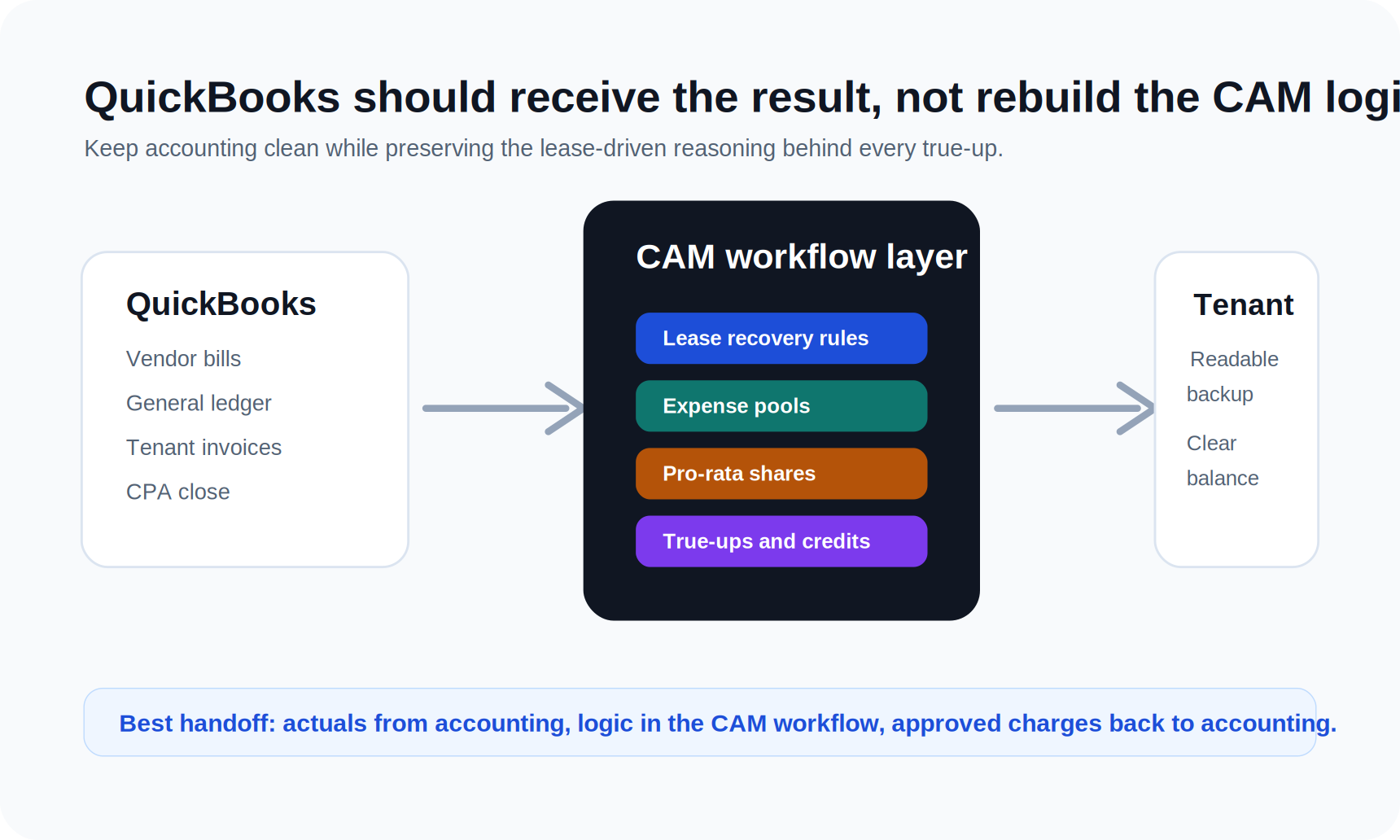

Your year-end CAM close can fail in the handoff, not in the math.
If property operations, accounting, and leasing use three different files or owners to carry the same set of expenses, no spreadsheet is wrong until you discover it late.
This checklist is for the final 72-hour sprint before CAM statements are sent to tenants.
1) Freeze the Source of Truth
- Freeze the expense pool list.
- Freeze the tenant roster for the final estimation cycle.
- Freeze lease inputs that drive area, exclusivity, and CAM exclusions.
Anything changing after freeze should be logged as an explicit exception with date, approver, and reason.
2) Match Tenant Roster to Lease Terms
For each tenant in the statement set:
- Confirm tenant name spelling is identical across expense imports and tenant templates.
- Confirm unit names match lease abstraction keys.
- Confirm area basis (rentable / recoverable / leased) matches the lease language used this year.
One name mismatch can break a full month of allocations and turn a clean reconciliation into a rework cycle.
3) Reconcile Prior-Year Baselines
Before final distribution, open your prior-year variance summary and confirm:
- No carry-forward line item is copied in with no supporting change.
- Budget-to-actual variance is still classified by the same policy the tenant saw in the prior year.
- Recovery caps and non-recoverable carve-outs are still on the same page as last year unless a signed amendment changed them.
If there is a policy change, document it in the working packet before you run final true-up.
4) Build a Tenant-Facing Audit Trail
Each tenant file should include a small "how we got this number" section:
- Starting recoverable base
- Exclusions applied and exclusion date
- Proration or denominator changes
- Final rate used
When this is present, calls from tenants move from "defensive argument" to "quick check."
5) Separate Draft, Review, and Final Folders
Use only three folders for the final week:
1. Drafts: evolving numbers before approvals 2. Review Queue: files waiting for management or partner sign-off 3. Final: locked CAM packages with dated PDFs and issue logs
Do not push tenant-facing packets from draft folders.
6) Run a Final Tenancy Exception Pass
Before finalization:
- Add late rent adjustments to the exception log, not silently to totals.
- Flag vacant-to-occupied transitions with period-specific prorations.
- Verify no one-off invoices were omitted from operating expense schedules.
Exceptions are where most rework starts. If they are visible in one list, they are easy to answer.
7) Keep Tenant Communication Ready
Have one plain-language explanation table per recurring tenant question:
- Why this line changed
- Whether it was a known trend or a new charge
- Corrected total compared to prior cycle
Prepare this once and you can reuse it across 10+ tenants with only unit-specific text edits.
8) Lock Distribution and Retain the Packet
Set a single distribution cut-off time.
After that point:
- Freeze approvals
- Freeze tenant files
- Keep the full handoff packet in one archive location with versioned names
That archive becomes your defense against "I thought we had signed off already" disputes.
Keep the Handoff Predictable, Not Heroic
CAM rework is expensive because teams improvise under pressure.
The fastest way to reduce rework is not one big platform switch.
It is a predictable handoff sequence everyone follows the same week, with one shared packet, one source of truth, and one audit trail that proves what changed and why.
When handoff is predictable, your CAM close becomes faster, clearer, and much easier to defend.